NERVE COMPRESSION OF THE COMMON PERONEAL NERVE
By: Robert H. Sheinberg, D.P.M., D.A.B.P.S., F.A.C.F.A.S.
Nerves may be compressed from tight ligaments, inflamed tendons, tumors,
fracture fragments, varicose veins, scar tissue or injuries to the foot that
cause the foot and ankle to be misshapen (severe flatfoot). Nerve
compression may cause significant discomfort with weightbearing. Night
pain and pain while the patient is nonweightbearing are common as
well. The most important a physician can do is to direct the treatment
to the cause of the problem. If the foot is misshapen causing no pain
(numbness, tingling or shooting), the nerve does not need surgery, the foot
and ankle bones might. The wrong diagnosis can be disastrous. If
a tumor or varicose vein is causing the pain they may need to be resected to
allow the nerve to function normally. Anything abnormally applying
pressure to the nerve may cause symptoms. If a tight ligament is
identified, it has to be released to allow the nerve to function
normally. Occasionally nerve conduction studies are performed to
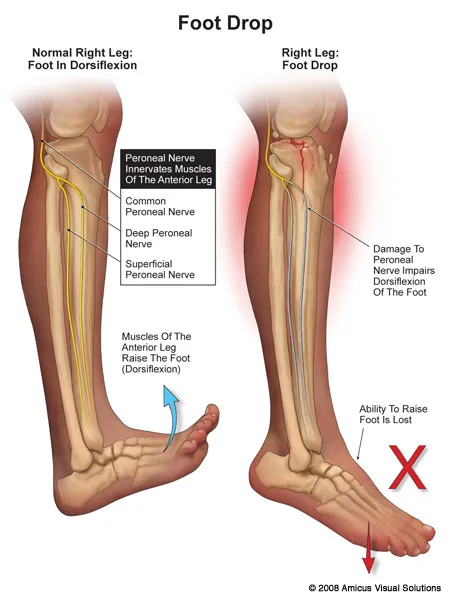
assess the degree of nerve compression and nerve damage. The common peroneal
nerve is located at the fibular neck, just to the outside of the knee.
If the nerve is injured or damaged, it can cause a dropfoot due to paralysis
of the muscles that it innervates.
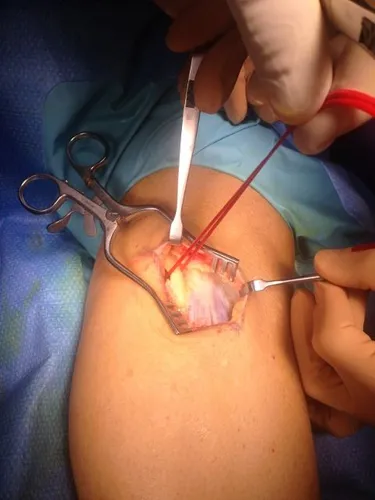
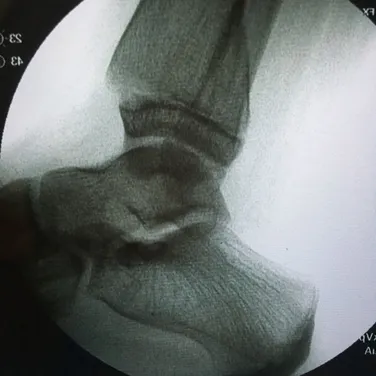
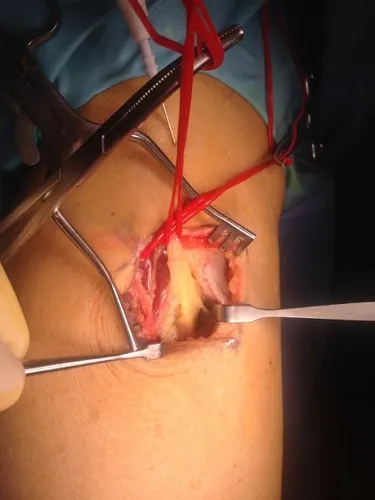
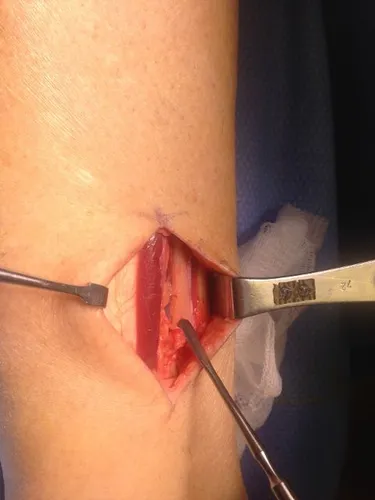
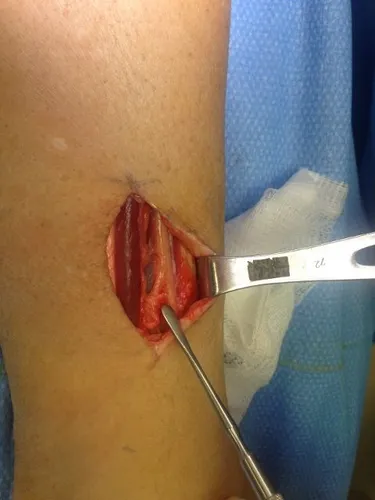
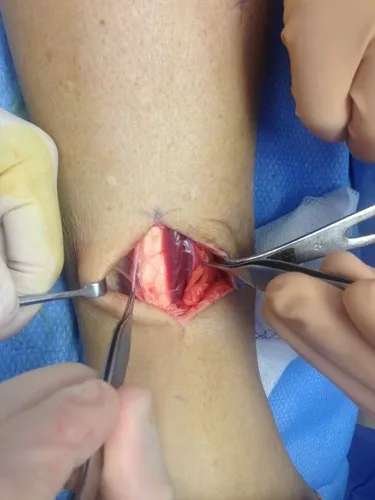
Intraop Pics of a Common Peroneal Nerve Entrapment being released for
Acute Dropfoot
We are also releasing the Superficial Peroneal Nerve in the Lateral
Leg
Nerves may be compressed from tight ligaments, inflamed tendons,
tumors, fracture fragments, varicose veins, scar tissue or injuries to
the foot that cause the foot and ankle to be misshapen (severe
flatfoot). Nerve compression may cause significant discomfort with
weightbearing. Night pain and pain while the patient is
nonweightbearing are common as well. The most important a
physician can do is to direct the treatment to the cause of the
problem. If the foot is misshapen causing no pain (numbness,
tingling or shooting), the nerve does not need surgery, the foot and
ankle bones might. The wrong diagnosis can be disastrous. If
a tumor or varicose vein is causing the pain they may need to be
resected to allow the nerve to function normally. Anything
abnormally applying pressure to the nerve may cause symptoms. If a
tight ligament is identified, it has to be released to allow the nerve
to function normally. Occasionally nerve conduction studies are
performed to assess the degree of nerve compression and nerve damage.
The common peroneal nerve is located at the fibular neck, just to the
outside of the knee. If the nerve is injured or damaged, it can
cause a dropfoot due to paralysis of the muscles that it
innervates. Nerves may be
compressed from tight ligaments, inflamed tendons, tumors, fracture
fragments, varicose veins, scar tissue or injuries to the foot that
cause the foot and ankle to be misshapen (severe flatfoot). Nerve
compression may cause significant discomfort with weightbearing.
Night pain and pain while the patient is nonweightbearing are common as
well. The most important a physician can do is to direct the
treatment to the cause of the problem. If the foot is misshapen
causing no pain (numbness, tingling or shooting), the nerve does not
need surgery, the foot and ankle bones might. The wrong diagnosis
can be disastrous. If a tumor or varicose vein is causing the pain
they may need to be resected to allow the nerve to function
normally. Anything abnormally applying pressure to the nerve may
cause symptoms. If a tight ligament is identified, it has to be
released to allow the nerve to function normally. Occasionally
nerve conduction studies are performed to assess the degree of nerve
compression and nerve damage. The common peroneal nerve is located at
the fibular neck, just to the outside of the knee. If the nerve is
injured or damaged, it can cause a dropfoot due to paralysis of the
muscles that it innervates.